
What We Use for Bait
Live bait, cut bait and lures on Aquatic Escapes charters, and what each one catches
Bait is where a fishing day is won or lost. Captain Jarrod nets fresh live bait before every trip, so you start the day with a livewell full of the same thing the fish are already eating, not yesterday’s frozen leftovers.
Here is every bait we use on Tampa Bay and up and down Florida’s Gulf coast: what it is, how we fish it, and what eats it. All of it is included in your trip. Call or text 656.242.7172 with any questions.
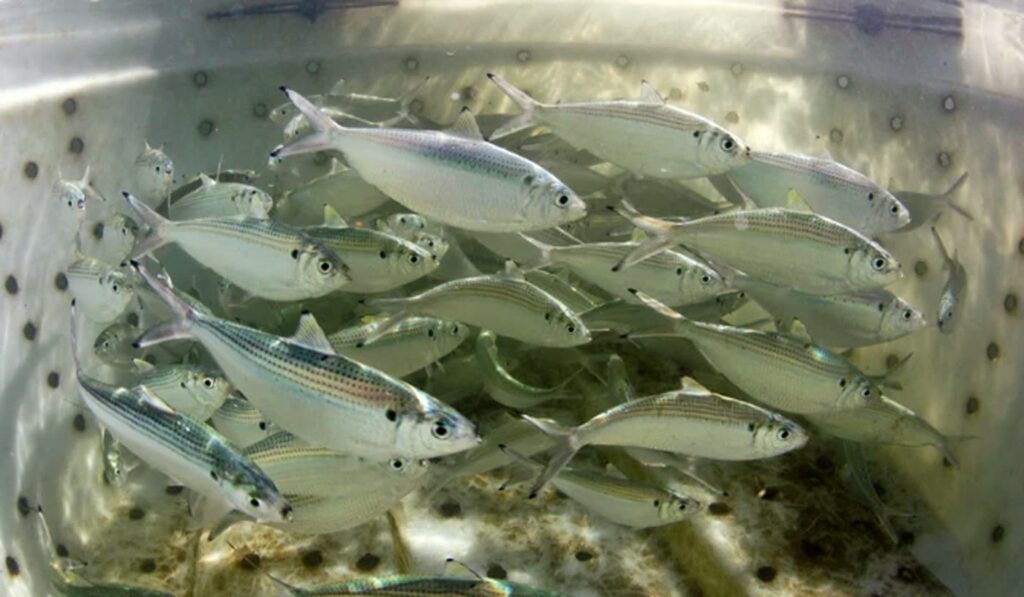
Greenbacks (Scaled Sardines)
What it is
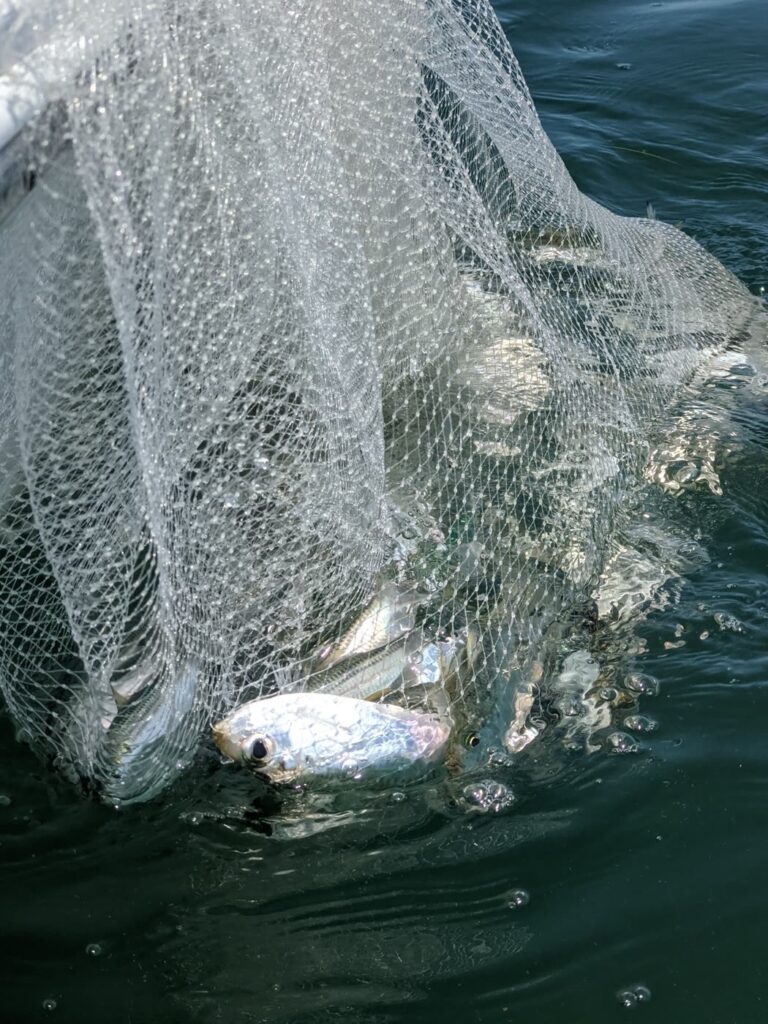
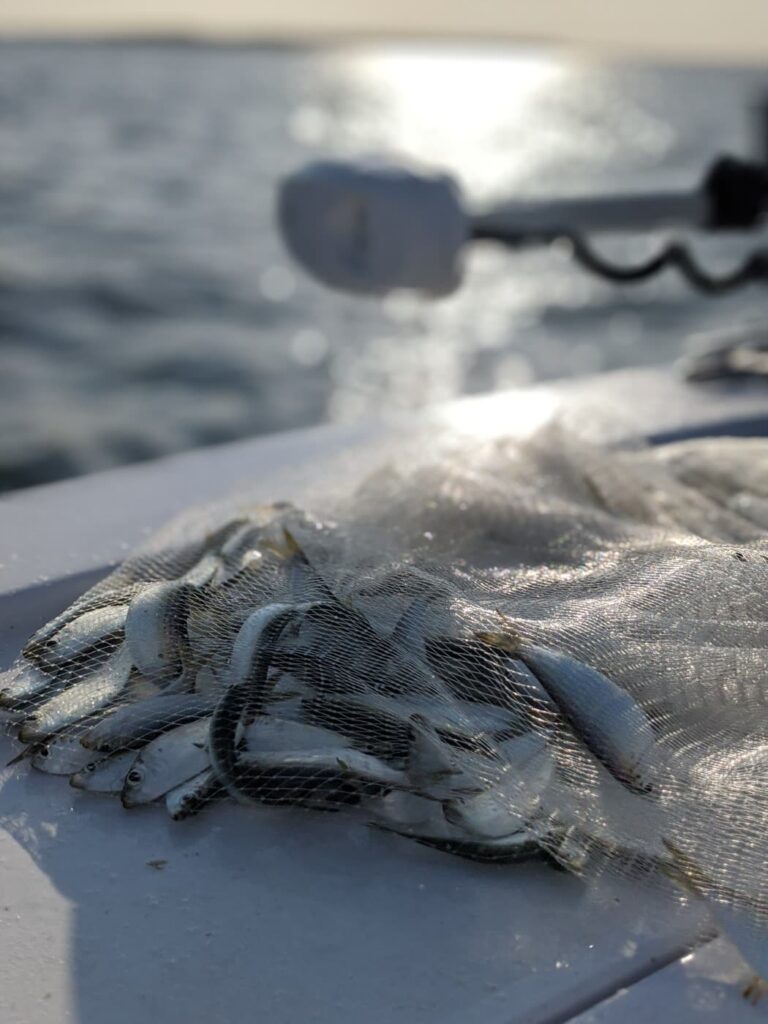
Scaled sardines, called greenbacks or whitebait around Tampa Bay. Silver, palm sized, and the number one live bait on this coast.
How we fish it
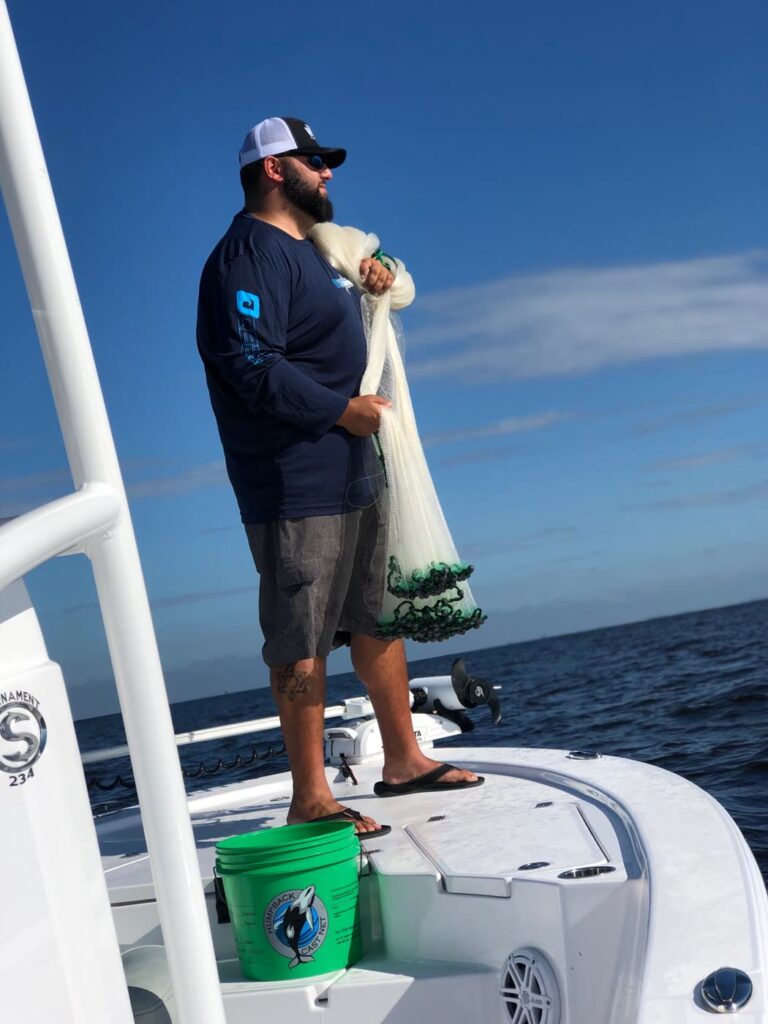
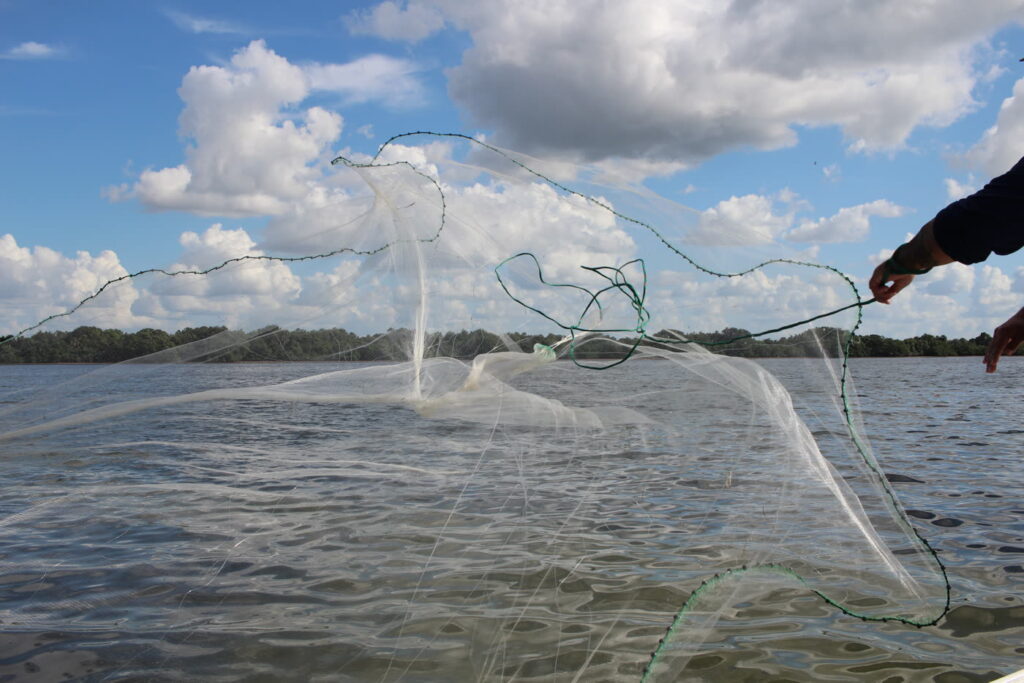
- We net them ourselves before every trip, usually over the grass flats or around channel markers, after chumming them up with a block or with jack mackerel.
- They go straight into the livewell and stay lively all day.
- We free-line them with no weight, or fish them under a cork when the current is moving.
What eats it
Snook, redfish, trout, mangrove snapper, Spanish mackerel, kingfish, tarpon and just about everything else that swims in Tampa Bay.
Captain Jarrod: When the greenbacks show up in spring and stay through fall, the fishing gets easy. A few handfuls thrown as live chum will bring a whole shoreline to life.
Threadfin Herring
What it is
A bigger, oilier cousin of the greenback, with a long trailing fin off the dorsal.
How we fish it
- Threadfins school in deeper water, around bridges, markers and nearshore reefs, and come up in the same cast net.
- They are bigger and bloodier than greenbacks, which makes them a better bait when you want something with more scent in the water.
- Slow trolled or free-lined, alive or cut in half.
What eats it
Kingfish, sharks, tarpon, big snook and grouper.
Captain Jarrod: When we want a bigger bite, we go up in bait size. A threadfin keeps the small stuff off the hook.
Live and Fresh Shrimp
What it is
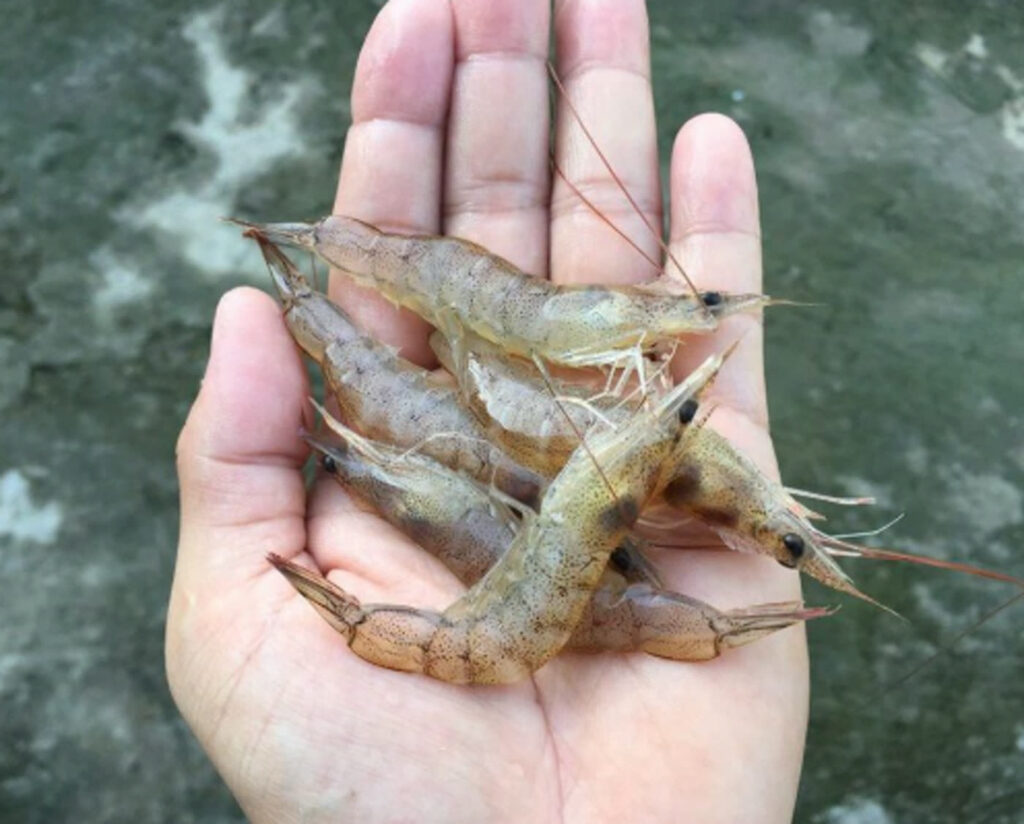
The most dependable bait in Florida. Everything eats a shrimp.
How we fish it
- Fished live under a popping cork over the grass flats, or on the bottom with just enough weight to hold.
- Around bridge pilings and docks we fish them tight to the structure for sheepshead and snapper.
- Fresh dead shrimp on the bottom still catches when the water is cold and the fish are sluggish.
What eats it
Speckled trout, redfish, sheepshead, black drum, mangrove snapper, pompano and anything else feeding on the flats.
Captain Jarrod: If the kids are on board, shrimp under a cork keeps rods bending. There is always something willing to eat one.
Pinfish and Grunts
What it is
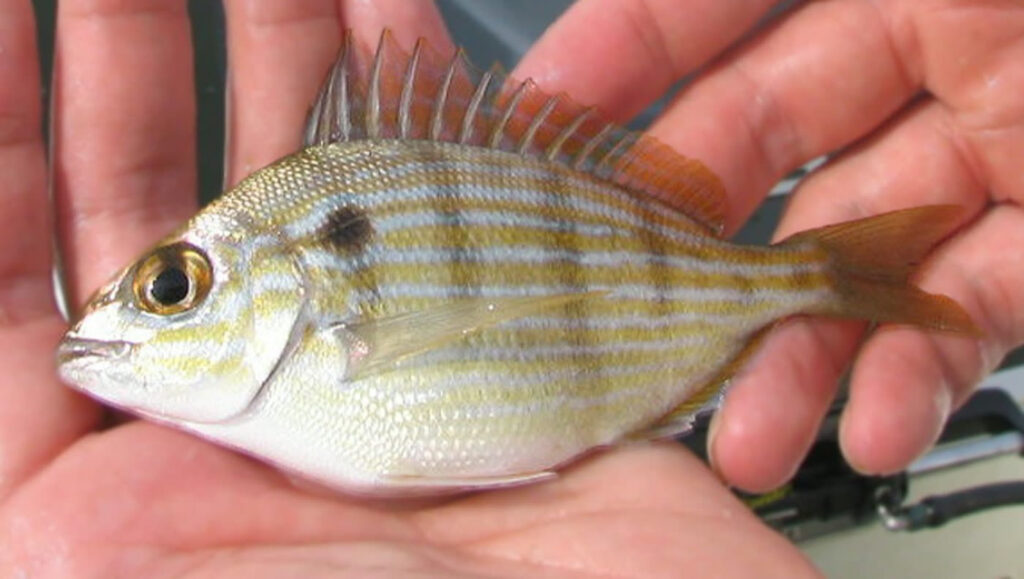
Tough little reef fish that live on the same grass flats we fish.
How we fish it
- We catch them in bait traps and on the cast net, and keep a few big ones for the fish that want a real mouthful.
- Fished on the bottom or under a float along mangrove shorelines and around structure.
- A lively pinfish swims hard and stays on the hook, so it fishes well while we work other rods.
What eats it
Big snook, gag grouper, cobia and sharks.
Captain Jarrod: Small bait, small fish. Big bait, big fish. When Captain Jarrod puts out a big pinfish, he is fishing for one good bite, not a bunch of little ones.
Crabs: Fiddlers and Blue Crabs
What it is
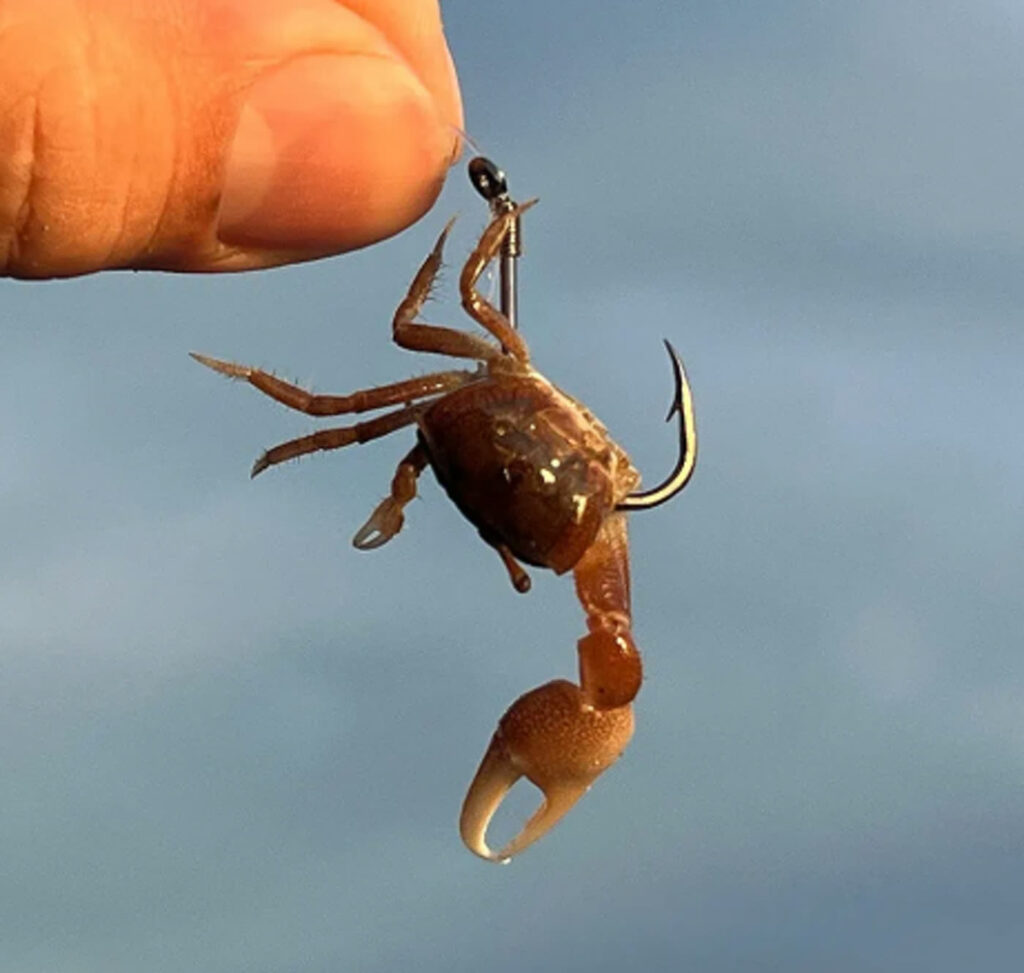
Fiddler crabs for sheepshead in the winter, and blue crabs when the tarpon are rolling.
How we fish it
- Fiddlers go on a small strong hook and drop straight down against bridge pilings, docks and rock piles.
- Blue crabs, quartered or whole with the points off, get drifted to rolling tarpon during the summer.
- Crabs stay on the hook well and are a natural food for both fish.
What eats it
Sheepshead, black drum, permit and tarpon.
Captain Jarrod: Sheepshead eat crabs off the barnacles all day. A fiddler crab is the closest thing to what they already expect.
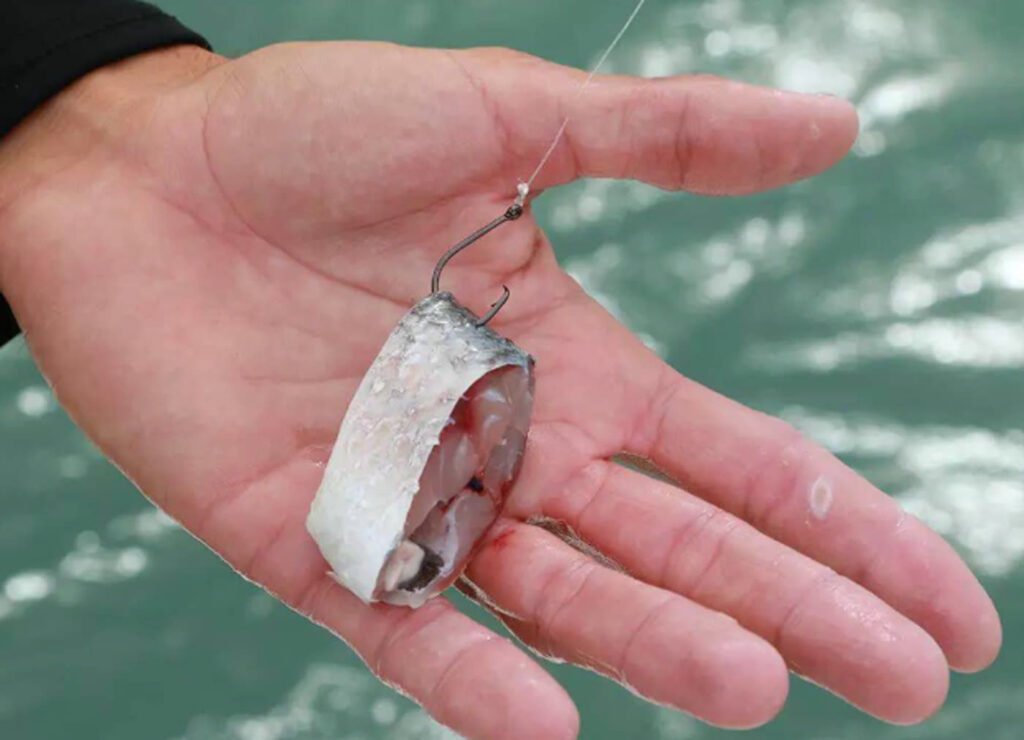
Cut Bait
What it is
Chunks of ladyfish, mullet, mackerel or threadfin. Bloody, oily and easy to smell.
How we fish it
- Redfish feed by scent, so a chunk of cut bait on the bottom near an oyster bar or a mangrove point is one of the best ways to find them.
- For sharks we fish bigger chunks on wire with a chum slick running behind the boat.
- Cut bait works when the water is stained or the current is ripping and fish need help finding the hook.
What eats it
Redfish, black drum, sharks and catfish that nobody wants.
Captain Jarrod: A ladyfish caught on the first stop often turns into shark bait by the afternoon. Nothing goes to waste on this boat.
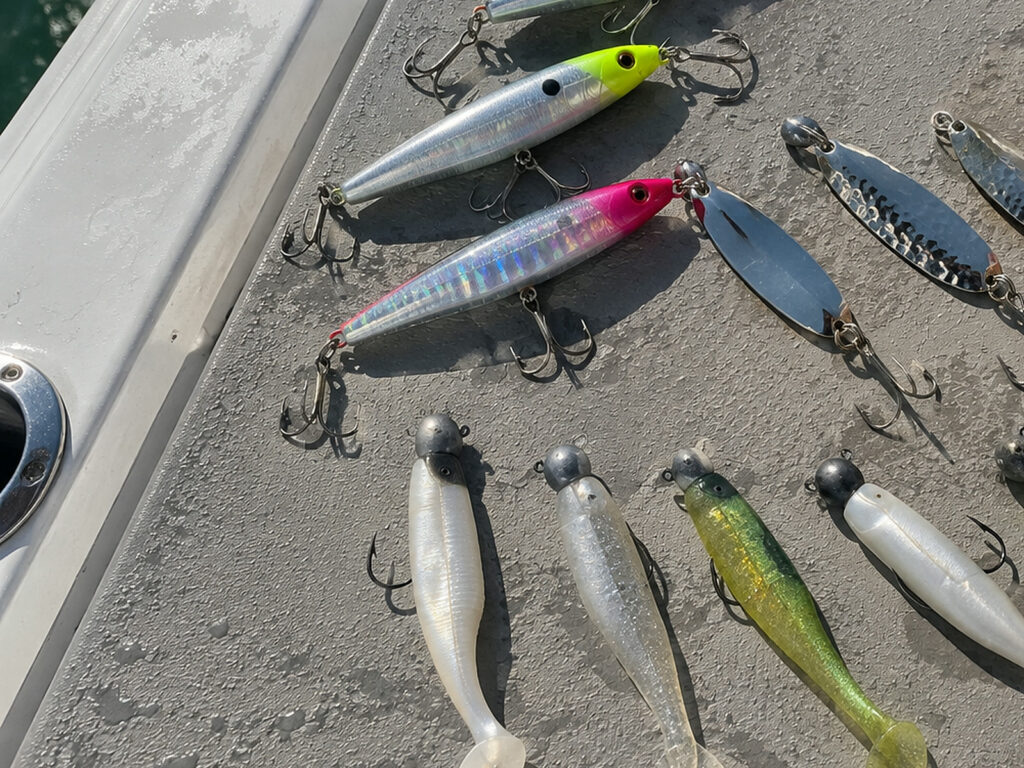
Lures: Gotcha Plugs, Spoons and Paddletails
What it is
When the fish are chasing, artificial baits cover water faster than anything alive.
How we fish it
- Gotcha plugs are Captain Jarrod’s favorite for Spanish mackerel: cast long, reel fast, pop the rod tip and hang on.
- Silver spoons with treble hooks flash like a fleeing baitfish and get eaten when the mackerel are busting on the surface.
- Paddletail soft plastics on a jig head are the workhorse for snook, redfish and trout: bounce them along the bottom or swim them over the grass.
- Topwater plugs at first light and last light for the most exciting bite of the day.
What eats it
Spanish mackerel, snook, redfish, trout, jacks and ladyfish.
Captain Jarrod: On lures he stays with 20 pound fluorocarbon leader instead of wire, even for mackerel. You lose the occasional plug, but you get far more bites.
Which Bait for Which Fish
The short version. This is where Captain Jarrod starts, and then we adjust to what the fish tell us that day.
| Fish | First choice | Backup | Lure option |
|---|---|---|---|
| Snook | Live greenbacks, free-lined | Pinfish, shrimp | Paddletail on a jig head, topwater |
| Redfish | Cut ladyfish or pinfish on the bottom | Live shrimp, greenbacks | Gold spoon, paddletail |
| Speckled trout | Live shrimp under a popping cork | Greenbacks | Paddletail on a jig head |
| Sheepshead | Fiddler crabs | Live shrimp | Rarely takes a lure |
| Mangrove snapper | Small greenbacks, free-lined | Live or fresh shrimp | Small jigs |
| Spanish mackerel | Live greenbacks | Threadfins | Gotcha plugs, silver spoons |
| Kingfish | Live threadfins on a stinger rig | Big greenbacks | Trolling spoons |
| Grouper | Live pinfish or grunts | Cut threadfin | Trolled plugs |
| Tarpon | Live blue crabs | Threadfins, big greenbacks | Rarely, we stay with live bait |
| Sharks | Fresh cut bait: ladyfish, mackerel, mullet | Whole threadfins | None, cut bait and a chum slick |
Bait, ice, rods, reels and tackle are included on every trip. You are welcome to bring one rod and reel of your own and a small tackle bag.
Bait Questions We Get
Do I need to bring bait on a fishing charter?
No. Live and frozen bait is included on every Aquatic Escapes charter, along with rods, reels and tackle. Captain Jarrod nets fresh live bait before your trip.
What is the best live bait in Tampa Bay?
Greenbacks, also called scaled sardines or whitebait. Almost every inshore and nearshore species in Tampa Bay eats them, and we net them fresh before each trip.
What are greenbacks?
Greenbacks are scaled sardines, a small silver baitfish that schools on the grass flats and around markers. Around Tampa they are the standard live bait, and a few handfuls thrown as live chum will fire up a whole shoreline.
Do you use live shrimp?
Yes. Shrimp are the most dependable bait in Florida, fished under a popping cork on the flats or on the bottom around docks and bridges. They are the best bait for beginners and kids because everything eats them.
Do you fish with lures?
Yes, when it fits. Gotcha plugs and spoons for Spanish mackerel, paddletails on jig heads for snook, redfish and trout, and topwater plugs early and late. Most days we use both live bait and artificials.
How do you catch your bait?
With a cast net, and with bait traps for pinfish. We chum the bait up first, then throw the net, and the bait goes straight into the livewell so it stays lively all day.
Fresh Bait, Every Trip
Private charters across Tampa Bay, St. Pete, Clearwater, Bradenton, Sarasota and Crystal River, with the bait already in the well when you step on.
Tampa fishing charters inshore and offshore, plus scalloping, boat tours and sunset cruises across Tampa Bay, St. Pete, Bradenton, Clearwater, Crystal River and the Gulf of America.