
How We Catch Them
Tampa Bay fishing techniques, rods, reels and rigs from Captain Jarrod Wallach
This is the tackle and the techniques we actually use on Aquatic Escapes charters, species by species: the rod, reel, line, leader and hook, how we fish it, and when it works best on Tampa Bay.
All rods, reels, tackle and bait are included on every trip, so you don’t need to bring a thing. If you want to learn, Captain Jarrod will show you exactly how it’s done. Questions? Call or text 656.242.7172.
- Our Tackle
- Circle Hooks
- Snook
- Redfish
- Speckled Trout
- Sheepshead
- Mangrove Snapper
- Spanish Mackerel
- Kingfish
- Grouper and Snapper
- Tarpon
- Sharks
- Night Fishing
- Scalloping
Our Tampa Fishing Tackle at a Glance
Most of our inshore fishing is done on 7 foot 6 inch custom inshore rods with fast action tips for long, accurate casts, paired with Shimano Stradic 3000 and 4000 spinning reels. For offshore and sport fishing we step up to heavier rods with Stradic 6000 and 8000 reels, plus short conventional rods for grouper digging and trolling.
| Trip or target | Rod | Reel | Main line | Leader | Hooks and lures |
|---|---|---|---|---|---|
| Inshore (snook, redfish, trout) | 7 ft 6 in custom, fast action tip | Shimano Stradic 3000 or 4000 | 20 lb braid | 20 lb fluorocarbon | Circle hooks, popping corks |
| Picky fish (mangrove snapper) | 7 ft 6 in custom, fast action | Stradic 3000 or 4000 | 20 lb braid | 15 lb fluorocarbon | Small circle hooks |
| Spanish mackerel | 7 ft 6 in custom, fast action | Stradic 3000 or 4000 | 20 lb braid | 20 lb fluorocarbon | Gotcha lures, spoons, long shank J hooks |
| Offshore and sport fishing | Heavier spinning rods | Stradic 6000 or 8000 | Heavier braid | Heavy fluorocarbon | Circle hooks |
| Grouper digging and trolling | 5 to 6 ft conventional | Conventional reels | Heavy line | Heavy fluorocarbon | Circle hooks with natural bait |
| Sharks | Heavy rods | Heavy reels | Heavy line | Wire | Circle hooks (required with natural bait) |
Why braid and fluorocarbon? Braid casts farther, has almost no stretch so you feel every bite, and cuts through sea grass. A fluorocarbon leader is nearly invisible in clear water and stands up to oyster bars, barnacles and dock pilings.
We Always Use Circle Hooks
Every Aquatic Escapes trip is fished with circle hooks. A circle hook slides to the corner of the fish’s mouth and hooks it in the lip, instead of being swallowed and hooking the fish in the gut. That means released fish swim away healthy, and it protects the reef and the fishery we depend on.
They are easy for beginners too: no hard hookset. When the rod bends, just reel tight and the hook sets itself. Florida requires non-stainless steel circle hooks for Gulf reef fish and sharks when fishing natural bait, and we use them on everything.
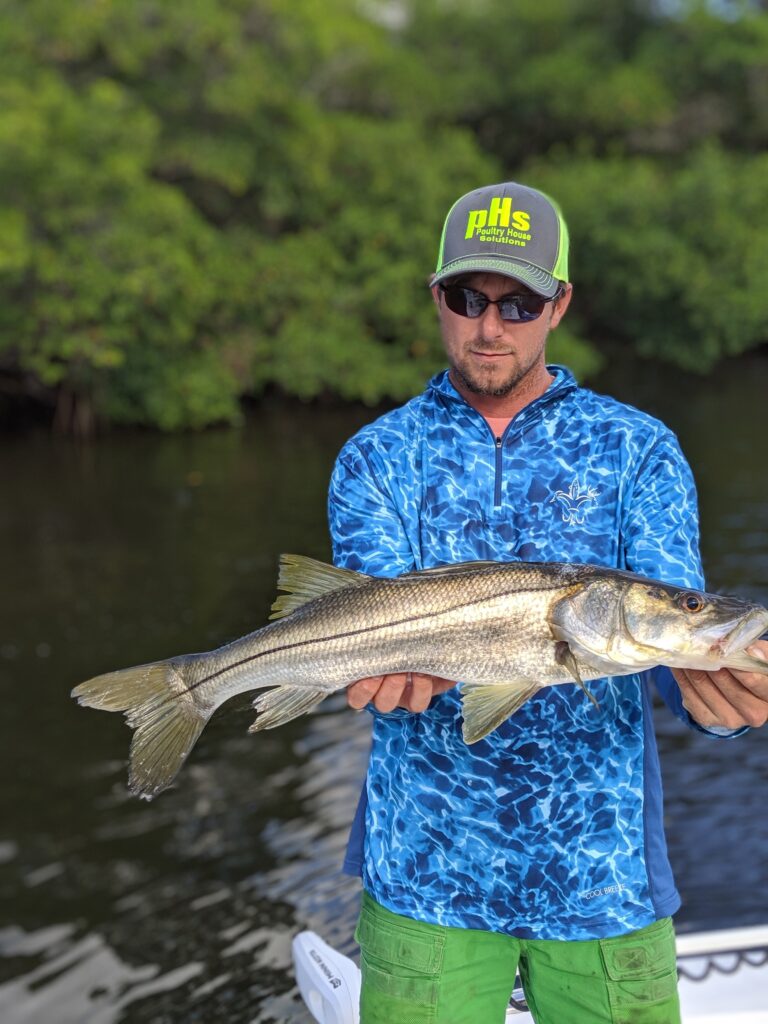
How We Catch Snook
The setup
7 foot 6 inch custom inshore rod with a fast action tip, Shimano Stradic 3000 or 4000, 20 pound braid, 20 pound fluorocarbon leader and a circle hook sized to the bait.
How we fish it
- Before the trip we throw a cast net for live whitebait (scaled sardines), the bait snook in Tampa Bay can’t resist.
- We anchor or stake out up-tide of mangrove points, oyster bars and dock lines, toss a few handfuls of live chum to get the fish fired up, then free-line a whitebait back into the strike zone.
- The fast tip lets you cast a light live bait tight to the mangroves without a sinker. When the line starts peeling, reel tight instead of jerking and let the circle hook do its job.
Captain’s tip: Snook have a sharp gill plate and a sandpaper mouth. Twenty pound fluorocarbon holds up to it and still gets bit.
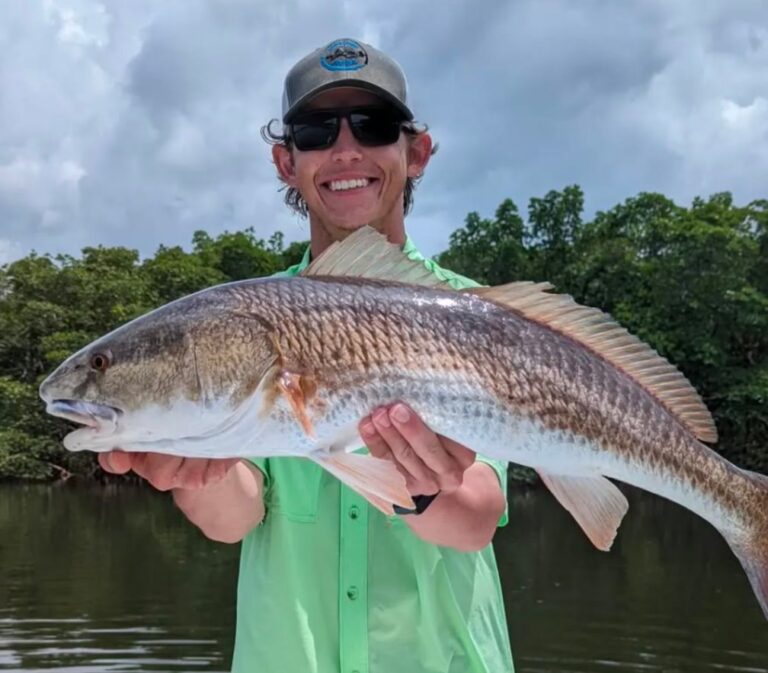
How We Catch Redfish
The setup
The same inshore setup: 7 foot 6 inch fast action rod, Stradic 3000 or 4000, 20 pound braid, 20 pound fluorocarbon and a circle hook.
How we fish it
- Redfish eat by smell, so cut bait works: chunks of pinfish or ladyfish on the bottom near oyster bars and mangrove edges. Live shrimp and whitebait work too.
- On high tides the reds push up under the mangroves. On low tides they gather in potholes and along the edges of the flats, and in the fall they travel in big schools across the flats around Apollo Beach and Cockroach Bay.
- Let the rod load before you reel. A redfish on a circle hook almost always ends up hooked in the corner of the mouth.
Captain’s tip: The slot is 18 to 27 inches. Big bull reds get a quick photo and go right back to spawn.
Best months
September, October, January. See What’s Biting for the full calendar.
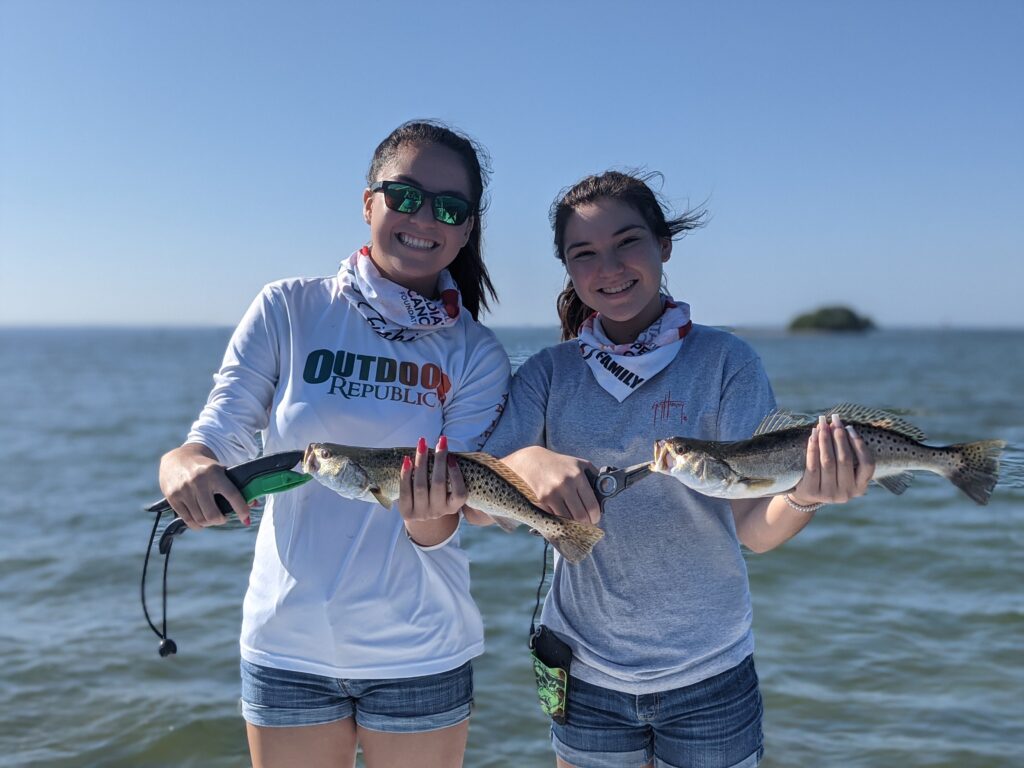
How We Catch Speckled Trout
The setup
Inshore spinning setup with 20 pound braid and a 15 or 20 pound fluorocarbon leader under a popping cork.
How we fish it
- We drift the grass flats in 3 to 6 feet of water with a live shrimp or whitebait under a popping cork. A sharp pop of the rod makes the cork chug and sounds like fish feeding.
- When the cork goes under, reel down and come tight. Trout have soft mouths, so no hard hookset.
- Where there is one trout there are usually more, so once we find them we drift the same stretch again.
Captain’s tip: Popping corks are the easiest way for kids and first timers to catch fish on the flats. You can watch the bite happen.
Best months
November, January, April. See What’s Biting for the full calendar.
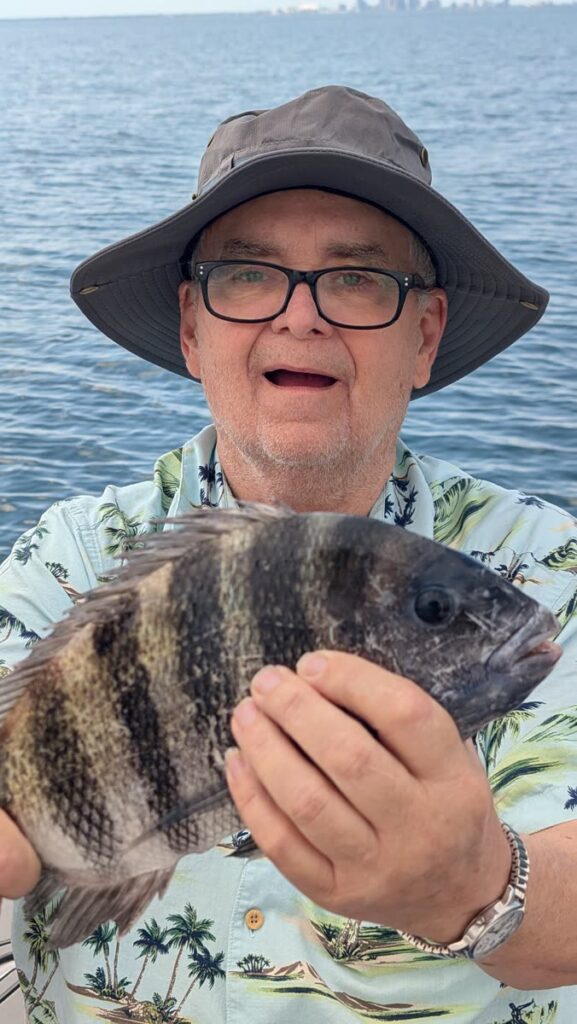
How We Catch Sheepshead
The setup
Inshore spinning rod, 20 pound braid, 20 pound fluorocarbon, a small strong circle hook and just enough weight to hold the bait against the pilings.
How we fish it
- Sheepshead eat crabs and barnacles off hard structure, so we fish fiddler crabs and live shrimp tight to bridge pilings, docks and rock piles.
- Drop straight down next to the structure and keep the line tight. The bite is a light tap or two, and the trick is to lift and reel as soon as the rod gets heavy.
- Winter is prime time, with the spawn peaking in February around the Skyway, the Gandy and the Howard Frankland.
Captain’s tip: They are called convict fish for their stripes and have teeth like a person. Great eating, 12 inch minimum, 8 per person.
Best months
January, February, December. See What’s Biting for the full calendar.
How We Catch Mangrove Snapper
The setup
Inshore spinning setup with 20 pound braid, dropping to a 15 pound fluorocarbon leader and a small circle hook when the snapper get picky.
How we fish it
- Mangrove snapper have great eyesight, so this is where Captain Jarrod goes lighter on the leader. Fifteen pound fluorocarbon gets noticeably more bites than 20.
- We chum around bridges, rock piles and reefs, then free-line or lightly weight a small piece of bait or a live whitebait back into the slick.
- Summer is peak season, and they bite well at night under the lights too.
Captain’s tip: Snapper strike fast and run for the rocks. Reel tight quickly and keep the rod up.
Best months
July, June, August. See What’s Biting for the full calendar.
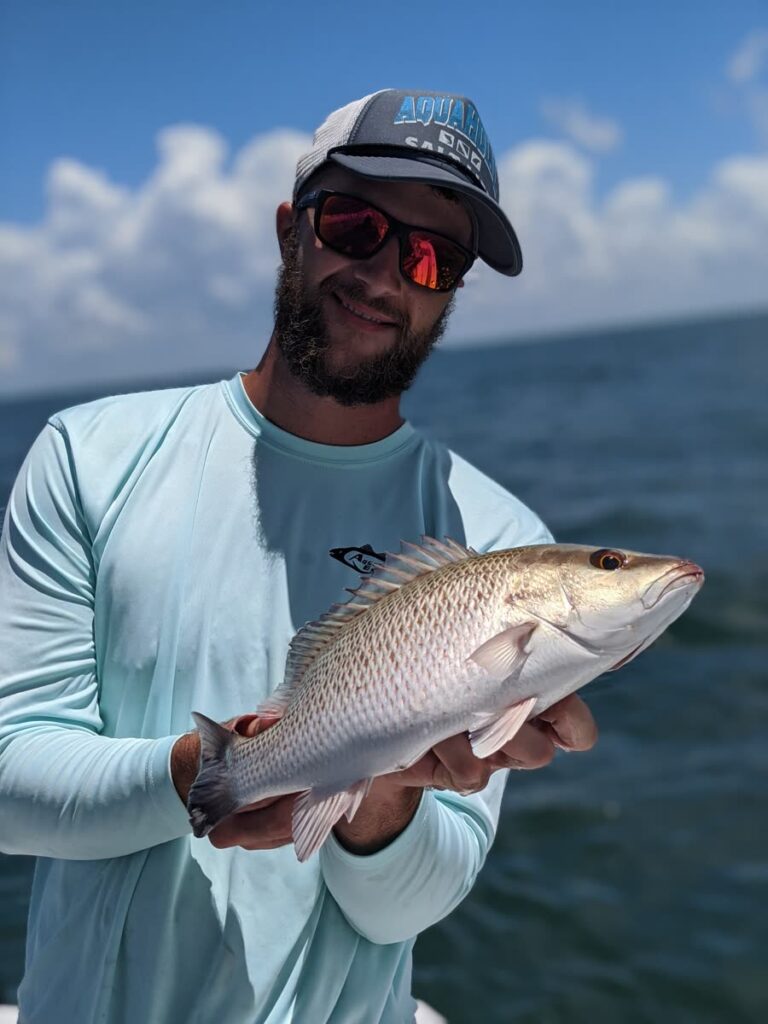
How We Catch Spanish Mackerel
The setup
Inshore spinning setup, 20 pound braid and 20 pound fluorocarbon leader, with Gotcha lures, spoons with treble hooks, or live bait on a long shank J hook.
How we fish it
- Gotcha lures are Captain Jarrod’s favorite for Spanish mackerel. Cast long, reel fast and pop the rod tip so the lure darts like a fleeing baitfish.
- Silver spoons with treble hooks are just as deadly when the mackerel are busting bait on the surface or following the birds.
- With live bait we switch to a long shank J hook. The long shank keeps their razor teeth off the leader.
Captain’s tip: Most guides switch to wire for Spanish mackerel. Captain Jarrod keeps 20 pound fluorocarbon. You lose an occasional lure to a cutoff, but the lighter leader gets more bites than wire.
Best months
March, April, October. See What’s Biting for the full calendar.
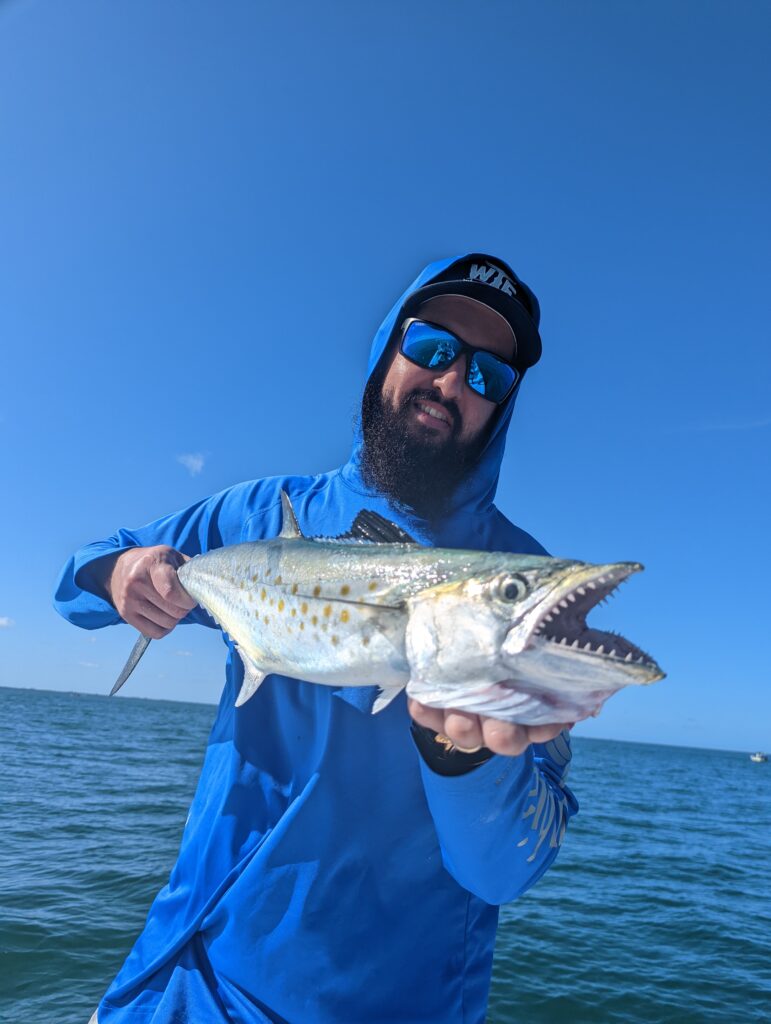
How We Catch Kingfish
The setup
Heavier spinning rods with Shimano Stradic 6000 or 8000 reels, plus a few conventional trolling setups.
How we fish it
- Kingfish (king mackerel) run the nearshore reefs and around Egmont Key during the spring and fall runs, following the bait.
- The classic approach is slow trolling a live bait on a stinger rig: one hook through the nose and a trailing hook back toward the tail, on a short piece of wire because kingfish teeth slice through anything else.
- When a king hits, it takes off on a long, blistering run. Let it go, keep the drag smooth and enjoy the fight.
Captain’s tip: Kingfish must be 24 inches fork length, 3 per person.
Best months
April, October. See What’s Biting for the full calendar.
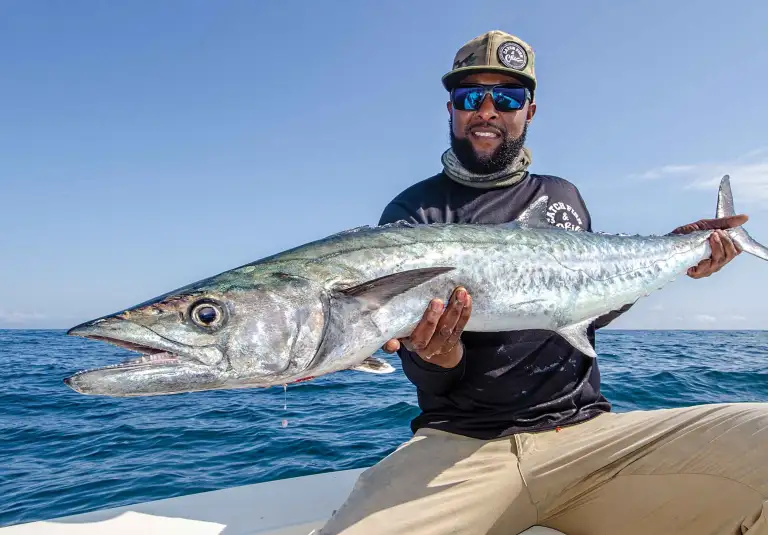
How We Catch Grouper and Snapper Bottom Fishing
The setup
Short conventional rods, 5 to 6 feet, for grouper digging and trolling, plus heavier spinning rods with Stradic 6000 and 8000 reels. Heavy fluorocarbon leader and circle hooks.
How we fish it
- Grouper live in rocks, ledges and wrecks, and the first thing a hooked grouper does is dive back into its hole. A short, stiff conventional rod gives you the leverage to pull it up off the bottom in the first few seconds. That is grouper digging.
- We fish live or cut bait on the bottom around nearshore structure. The same short conventional rods double as trolling rods on the way out.
- Florida requires non-stainless steel circle hooks when you fish for Gulf reef fish with natural bait, which is how Captain Jarrod fishes anyway.
Captain’s tip: Gag grouper are open only September 1 to 30 in 2026, and red grouper are open all year in state waters. Captains and crew on a charter keep zero.
Best months
September, October, February. See What’s Biting for the full calendar.
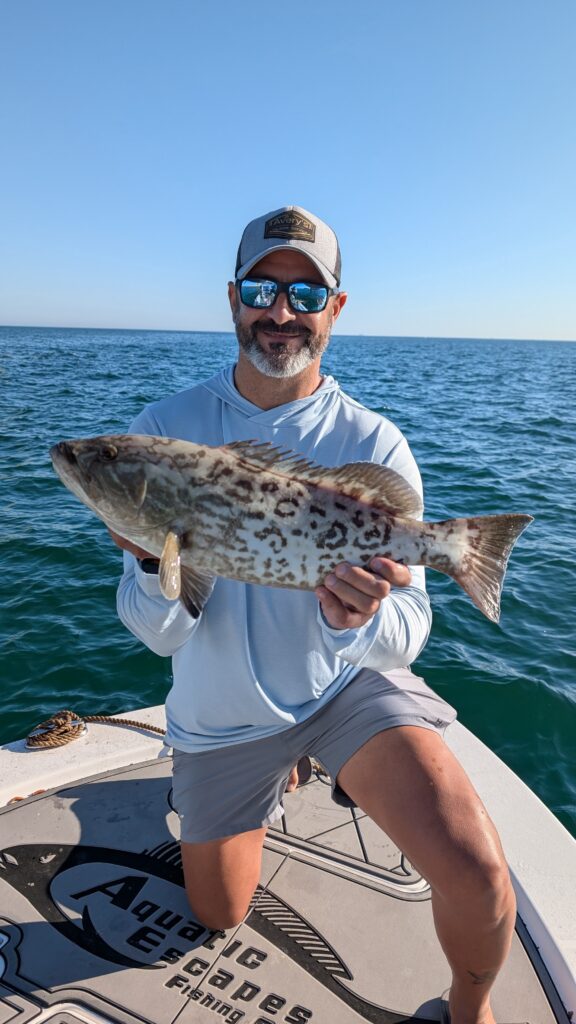
How We Catch Tarpon
The setup
Heavy spinning rods with Shimano Stradic 6000 or 8000 reels, heavy leader and circle hooks.
How we fish it
- Tarpon arrive in late April and roll along the beaches, the passes, Egmont Key and the Skyway through the summer.
- We present live crabs and baitfish to rolling fish. When a tarpon eats, reel tight and hold on. Jumps are part of the show.
- Every tarpon is released. Florida law says a tarpon over 40 inches has to stay in the water, so photos happen boatside.
Captain’s tip: Tarpon are catch and release unless you buy a tarpon tag, and we release every one.
Best months
May, June, July. See What’s Biting for the full calendar.
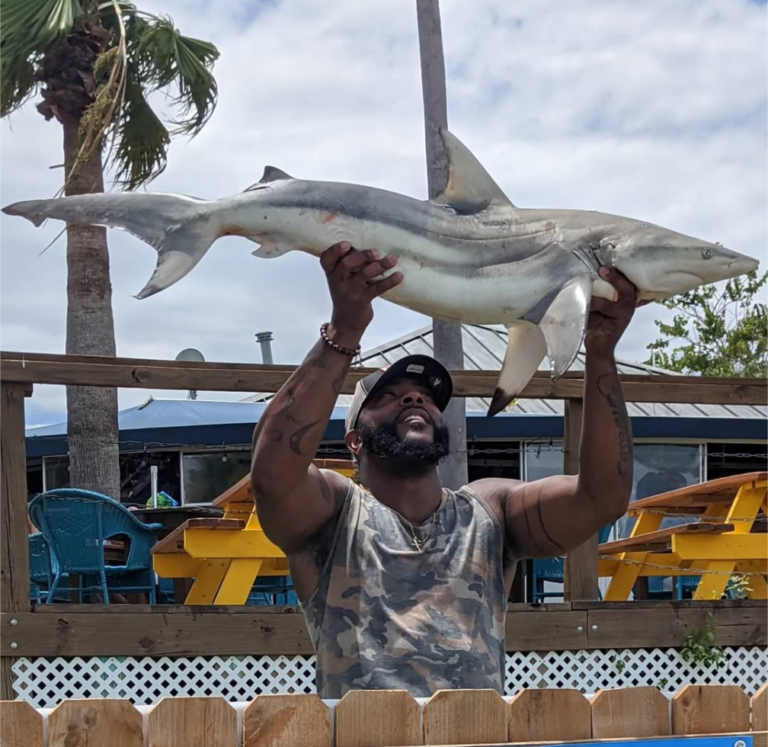
How We Catch Sharks
The setup
Heavy rods, wire leaders and circle hooks.
How we fish it
- Wire leaders are a must for sharks. Their teeth go through fluorocarbon in a second.
- We set up a chum slick along bars and channel edges and fish chunks of cut bait for blacktip, bull and bonnethead sharks.
- Florida requires non-offset, non-stainless steel circle hooks when you fish for sharks with natural bait. Circle hooks lip-hook the shark, so it swims away healthy after the photo.
Captain’s tip: Blacktip and bonnethead sharks: 1 per person with a limit of 2 per boat. Most of ours are released.
Best months
June, July, May. See What’s Biting for the full calendar.
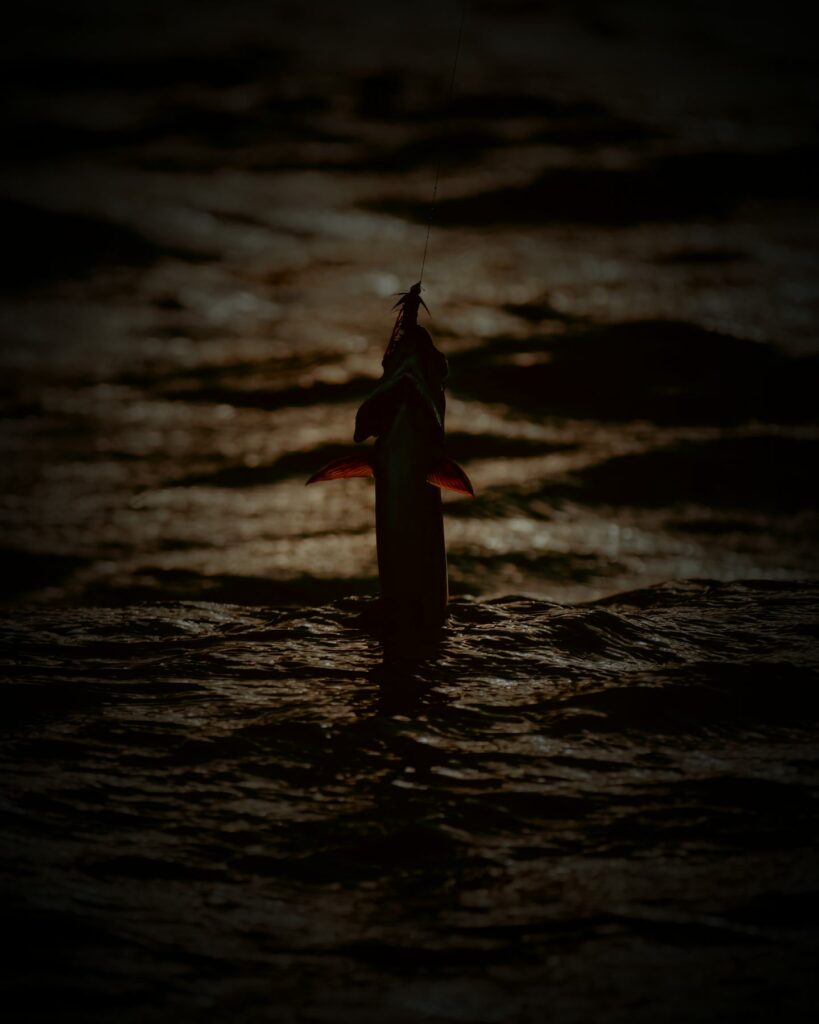
How We Catch Night Fishing
The setup
Inshore setups with 20 pound braid and fluorocarbon leader and circle hooks for snook, redfish and trout, or the heavy shark rods with wire for a night shark trip.
How we fish it
- Lighted docks and bridges draw shrimp and baitfish after dark, and snook, trout, redfish and snapper line up in the shadow line to feed.
- We ease into position, cast a live shrimp or whitebait up-current of the light and let it drift into the shadows.
- Summer nights are cooler and calmer, and the bite is often better than midday.
Captain’s tip: Snook are catch and release in summer. Handle them gently and let them swim off.
Best months
July, August, June. See What’s Biting for the full calendar.
How We Catch Scalloping
The setup
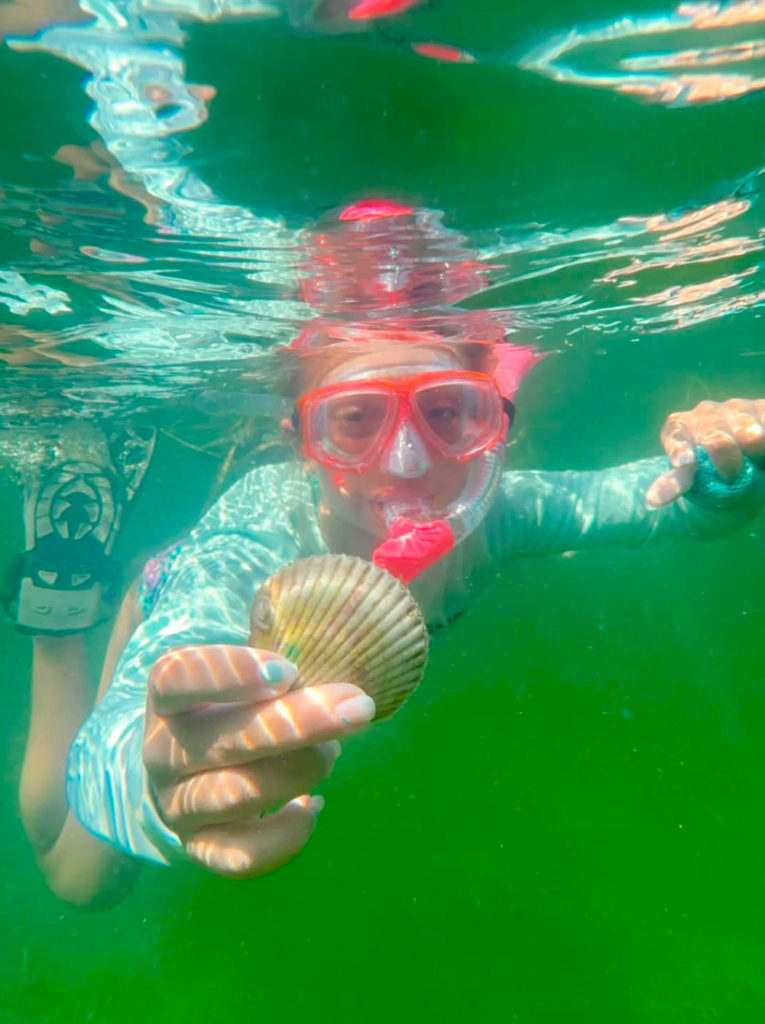
Mask, snorkel, fins and a mesh bag. Captain Jarrod handles the dive flag and the boat.
How we fish it
- Bay scallops live on the grass flats off Crystal River and Homosassa in about 4 to 8 feet of water.
- Snorkel slowly over the grass and look for the rows of bright blue eyes along the edge of the shell. Pick them up by hand and drop them in the bag.
- Florida requires a divers-down flag whenever people are snorkeling, and we fly one on every scallop trip.
Captain’s tip: 2026 season in Citrus and Hernando counties: July 1 to September 24. 2 gallons whole per person, 10 per boat.
Best months
July, August, September. See What’s Biting for the full calendar.
Fishing Tackle and Technique FAQs
Do I need to bring my own fishing gear?
No. Rods, reels, tackle and live or frozen bait are included on every Aquatic Escapes charter. You are welcome to bring one rod and reel of your own and a small tackle bag.
Why do you use circle hooks?
Captain Jarrod uses circle hooks on every trip. They protect the reef and the fishery because they hook fish in the corner of the mouth instead of the gut, so released fish swim away healthy. Florida also requires them for reef fish and sharks when using natural bait.
What size reel is best for inshore fishing in Tampa Bay?
A 3000 or 4000 size spinning reel is the sweet spot. Captain Jarrod uses Shimano Stradic 3000 and 4000 reels on 7 foot 6 inch fast action rods with 20 pound braid.
What line and leader do you use for inshore fishing?
20 pound braid as the main line for casting distance and feel, with a 20 pound fluorocarbon leader. When fish get picky, like mangrove snapper, he drops to 15 pound fluorocarbon.
What is the best lure for Spanish mackerel in Tampa Bay?
Gotcha lures are Captain Jarrod’s favorite, with spoons on treble hooks a close second. Cast long and reel fast.
Do you need a wire leader for Spanish mackerel?
Not always. Captain Jarrod sticks with 20 pound fluorocarbon. You lose a lure to their teeth now and then, but you get more bites than with wire. Wire is saved for sharks and kingfish.
Rules mentioned are Florida Fish and Wildlife Conservation Commission (FWC) regulations for Gulf of America state waters, checked September 2026.
Come Fish It With Us
Private Tampa fishing charters with all the tackle, bait and know-how included.
Tampa fishing charters inshore and offshore, plus scalloping, boat tours and sunset cruises across Tampa Bay, St. Pete, Bradenton, Clearwater, Crystal River and the Gulf of America.